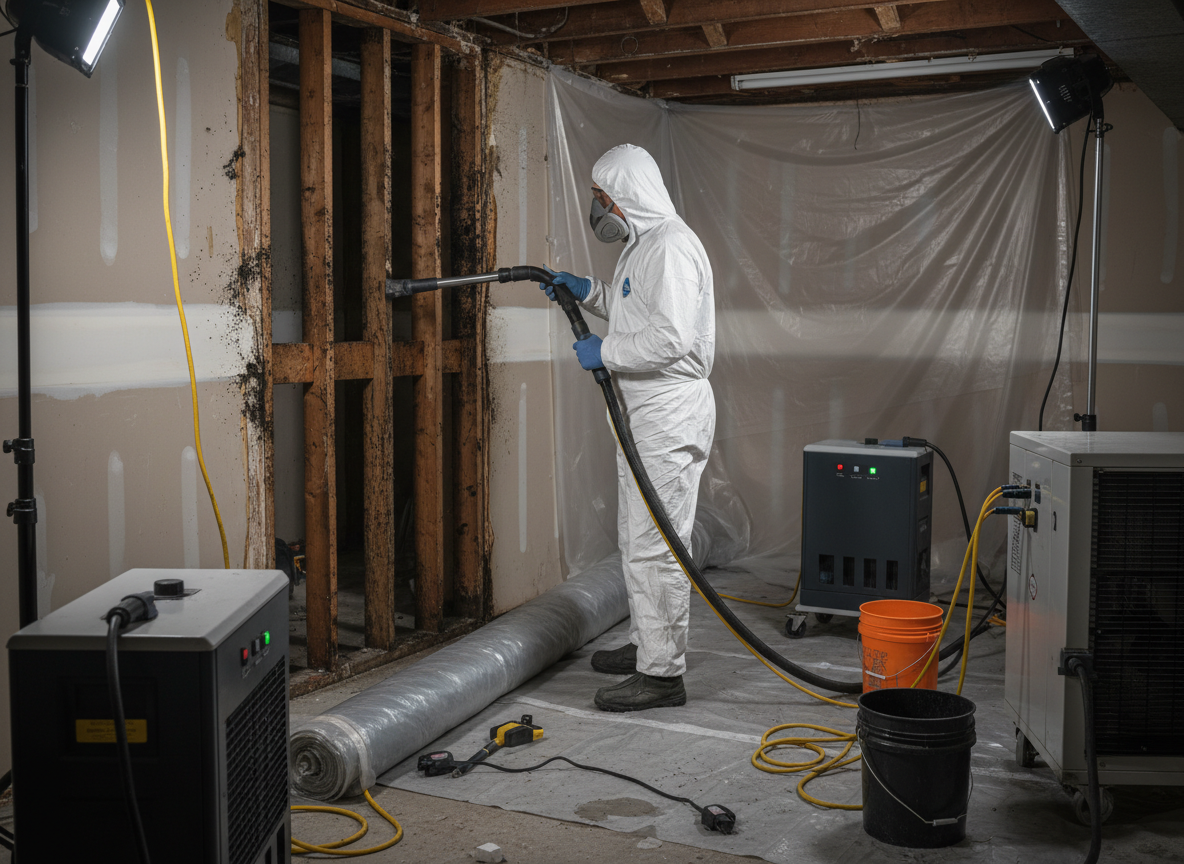
Mold remediation after water damage in Bryn Mawr requires immediate containment to stop spore spread through older stucco and wood-frame homes common along streets like Juanita. Technicians establish negative air pressure with HEPA filtration units before cutting out saturated drywall, insulation, and baseboards. Failure to address hidden moisture behind cabinets or in crawl spaces often leads to recurring growth once seasonal rains arrive from the San Bernardino Mountains.
Local housing stock built before 1970 frequently lacks modern vapor barriers, allowing water from roof leaks or appliance failures to migrate into subflooring and wall cavities. Remediation crews use moisture meters and thermal imaging to map the full extent, then apply antimicrobial treatments only after physical removal of porous materials. Homeowners in Bryn Mawr should avoid disturbing visible growth themselves, as this can aerosolize spores into HVAC systems that serve multiple rooms.
Post-remediation verification includes air sampling and surface testing to confirm spore counts have returned to normal outdoor baselines for the area. Drying equipment runs until wood moisture content drops below 12 percent, a critical threshold in the dry climate that still sees sudden humidity spikes. Incomplete jobs leave residents with lingering musty odors and potential code issues when selling properties in San Bernardino County.
Technician insight
In Bryn Mawr, the thing that catches most people out with Mold remediation after water damage is how water migrates along the stucco weep holes in homes built before the 1980s, especially after heavy runoff from the San Bernardino Mountains. Homeowners often stop at visible spots on the wall and miss the insulation behind, letting spores reappear once the next rain hits.
Crawlspace Mold After Roof Leak
Water from a winter roof leak in a 1960s Bryn Mawr home reached the crawlspace and soaked insulation under the master bedroom. We found active growth on floor joists and elevated spores in the HVAC return. Containment was set, saturated materials removed, and the space dried with targeted equipment. Clearance testing passed and the homeowner avoided a larger renovation later.
How it works
- 1
Initial Assessment
Technicians arrive within hours, document visible damage, and use meters to locate hidden moisture in Bryn Mawr homes.
- 2
Containment Setup
Plastic barriers and negative air machines isolate the work zone to prevent cross-contamination to unaffected rooms.
- 3
Material Removal
Affected drywall, carpet, and insulation are cut out and bagged for disposal following local disposal guidelines.
- 4
Drying and Treatment
Air movers, dehumidifiers, and EPA-registered antimicrobials treat remaining surfaces until moisture levels normalize.
- 5
Clearance Testing
Independent air and surface samples confirm the space meets post-remediation standards before reconstruction begins.
Pricing
Project cost depends on square footage affected, depth of hidden moisture, and whether HVAC cleaning is required.