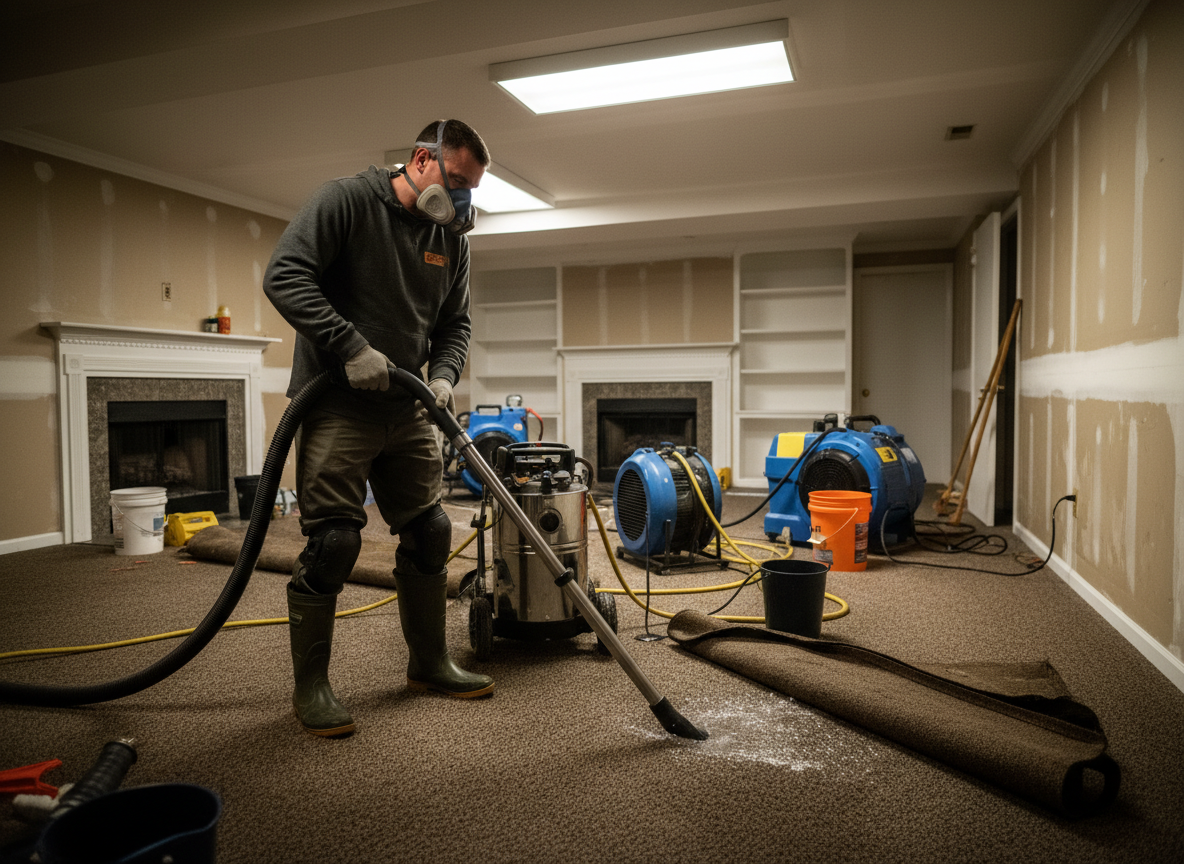
Water damage mitigation in Bryn Mawr starts with rapid containment to stop migration into wall cavities and subfloors common in the area's older single-family homes. Technicians use moisture meters and thermal imaging to locate hidden saturation behind stucco or in crawl spaces before extraction begins. Delaying this step often leads to mold growth within 48 hours when humidity spikes after seasonal rains.
Extraction focuses on removing standing water and pulling trapped moisture from carpet padding, hardwood, and drywall. In Bryn Mawr homes built before 1980, lath-and-plaster walls require different drying techniques than modern drywall to avoid cracking. Air movers and dehumidifiers are positioned based on the home's layout and airflow patterns to reach target moisture levels without over-drying.
Final verification includes post-drying moisture readings logged for every affected room. Materials that cannot be salvaged, such as saturated insulation or particleboard cabinet bases, are removed and documented. This documentation supports insurance claims for Bryn Mawr residents dealing with leaks from aging galvanized pipes or roof penetrations.
Ongoing monitoring visits confirm that relative humidity stays below 60 percent and no secondary moisture pockets remain. Homeowners receive a written drying log and guidance on preventing recurrence from common local sources like overflowing rain gutters or poor grading around foundations.
Technician insight
In Bryn Mawr, the thing that catches most people out with water damage mitigation is hidden moisture trapped in the original plaster walls of pre-1970 homes along streets like Juanita. Homeowners often stop at visible drying and miss the slow wicking into lath that shows up weeks later when humidity rises.
Crawl Space Leak After Rain
A Bryn Mawr homeowner noticed musty odors following heavy rain. Inspection found standing water under the house from a cracked perimeter drain. Extraction and targeted drying of joists and subfloor were completed over three days, with moisture readings returned to normal and no mold growth.
How it works
- 1
Initial Assessment
Technicians arrive within hours, inspect all affected zones with meters, and map moisture extent in Bryn Mawr homes.
- 2
Water Extraction
Standing water is removed using pumps and wands while protecting unaffected areas from cross-contamination.
- 3
Drying and Dehumidification
Equipment is placed to target hidden moisture in walls, floors, and ceilings until readings reach safe levels.
- 4
Verification and Documentation
Final moisture checks are recorded and provided to the homeowner along with any material removal notes.
Pricing
Upfront quotes provided after inspection; final cost depends on affected square footage and drying duration.