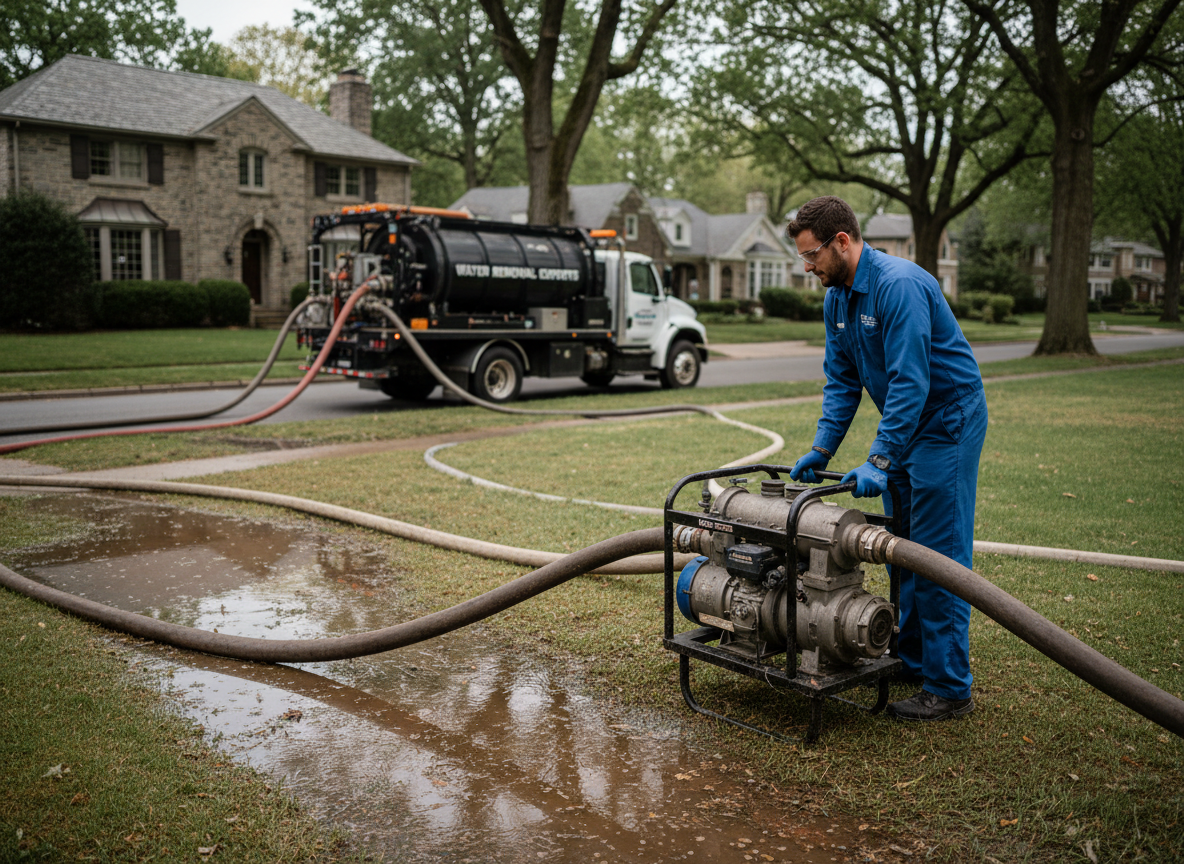
Water extraction begins with identifying the water source and categorizing the contamination level before pumps and vacuums remove standing liquid. In Bryn Mawr homes built on older foundations near Juanita Street, water often migrates under slabs or into crawl spaces where standard equipment cannot reach without targeted access points. Technicians monitor moisture levels with meters at multiple depths to confirm removal before any drying equipment starts, because residual water in clay soils common to the area prolongs the job and raises the risk of hidden structural issues.
Edge cases arise when extraction occurs in multi-story properties or after sewage backups, requiring containment barriers and disposal protocols that meet San Bernardino County health guidelines. Crews must account for electrical hazards in flooded basements and coordinate with utility shutoffs before proceeding. Equipment selection changes based on water volume, with submersible pumps for deep flooding and truck-mounted units for larger residential lots that see seasonal runoff from nearby hills.
Homeowners in Bryn Mawr frequently overlook carpet padding and insulation that retain water long after visible surfaces appear dry, leading to odor and microbial growth weeks later. Extraction teams document every affected material and provide written notes on what must be discarded versus what can be dried in place. This step protects against insurance disputes and ensures the property returns to a pre-loss condition without repeated callbacks.
Technician insight
In Bryn Mawr, the thing that catches most people out with water extraction company work is the way water travels under the older slab homes along streets like Juanita, where clay soil holds moisture for weeks and turns a simple pump-out into hidden mold if the perimeter isn't opened and checked.
Kitchen leak affecting adjacent rooms
A supply line failure sent water across the kitchen and into the living room of a single-story home in Bryn Mawr. Extraction crews found water had wicked under the slab edge and into the adjacent hallway carpet. They removed standing water, pulled saturated padding, and opened baseboards for airflow before handing the owner a drying plan.
How it works
- 1
Site Assessment
Technicians arrive within hours, locate the water source, test contamination, and map affected zones in the Bryn Mawr property.
- 2
Water Removal
Pumps and extraction wands pull standing water from floors, carpets, and low areas while protecting unaffected rooms.
- 3
Moisture Verification
Meters check walls, subfloors, and soil for remaining moisture before equipment is moved out.
- 4
Documentation Handover
Written records of removed materials and drying recommendations are provided for insurance or follow-up work.
Pricing
Pricing varies by water volume, depth, and access challenges typical in Bryn Mawr homes.