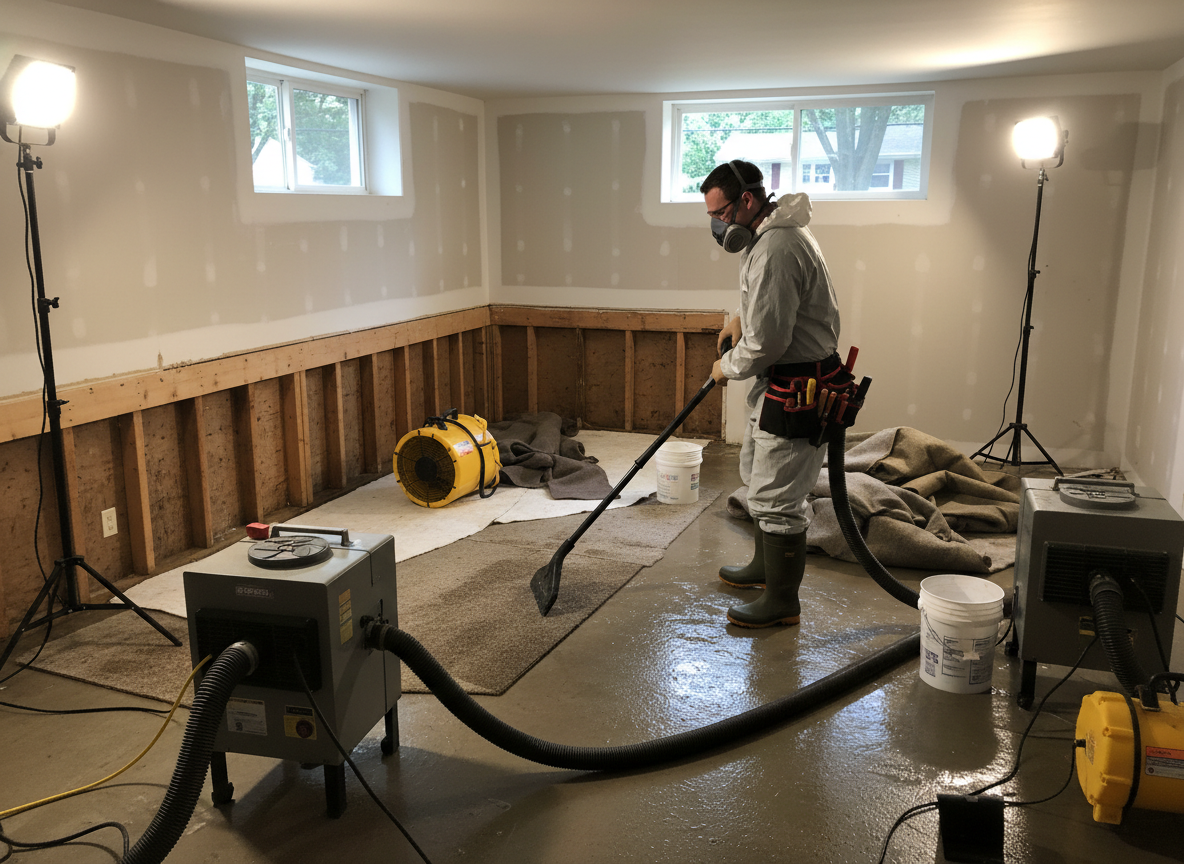
Water intrusion in Bryn Mawr homes often travels through stucco exteriors and into slab foundations common in the area's mid-century housing stock. Technicians must map moisture behind walls using meters because trapped water in these older builds leads to hidden mold growth that standard fans miss. San Bernardino County properties near the base of surrounding hills see extra runoff that pools against foundations during seasonal rains, requiring targeted extraction along perimeter drains rather than whole-room drying.
Edge cases include saturated insulation in attic spaces where roof leaks meet poor ventilation, a frequent issue in Bryn Mawr's single-story ranch homes. Removing wet drywall sections without disturbing electrical runs demands careful cutting around outlets, and crews check for asbestos in pre-1980 builds before demolition. Once water is pulled, dehumidifiers run longer in the dry regional air because rapid surface drying can trap moisture deeper in wood subfloors.
Restoration follows IICRC standards for category 2 or 3 water, with antimicrobial application only where gray water has contacted porous materials. Technicians document every step with photos for insurance adjusters because claims in the Bryn Mawr area often involve multiple affected rooms due to open floor plans. Final clearance testing confirms moisture levels below 15 percent before any reconstruction begins.
Technician insight
In Bryn Mawr, the thing that catches most people out with water damage restoration near me is older plaster-and-lath walls that hold moisture far longer than drywall, especially in homes built on the slight slopes where winter runoff from the surrounding hills soaks the stem walls.
Crawlspace leak in Bryn Mawr home
A homeowner noticed damp carpet near an exterior wall after heavy rain. Inspection found a cracked sewer cleanout allowing water under the slab. Extraction and targeted drying of the subfloor prevented mold while the line was repaired.
How it works
- 1
On-site assessment
Technicians arrive within hours, locate the water source, and map affected materials using moisture meters across Bryn Mawr homes.
- 2
Water extraction
Pumps and wands remove standing water from floors, carpets, and crawlspaces before it spreads to adjacent rooms.
- 3
Drying and dehumidification
Air movers and dehumidifiers run until readings show safe levels, with daily monitoring to prevent secondary damage.
- 4
Restoration and repairs
Damaged drywall, flooring, and insulation are replaced, followed by final cleaning and odor treatment.
Pricing
Upfront quotes provided after inspection; cost depends on water category, square footage affected, and materials involved.