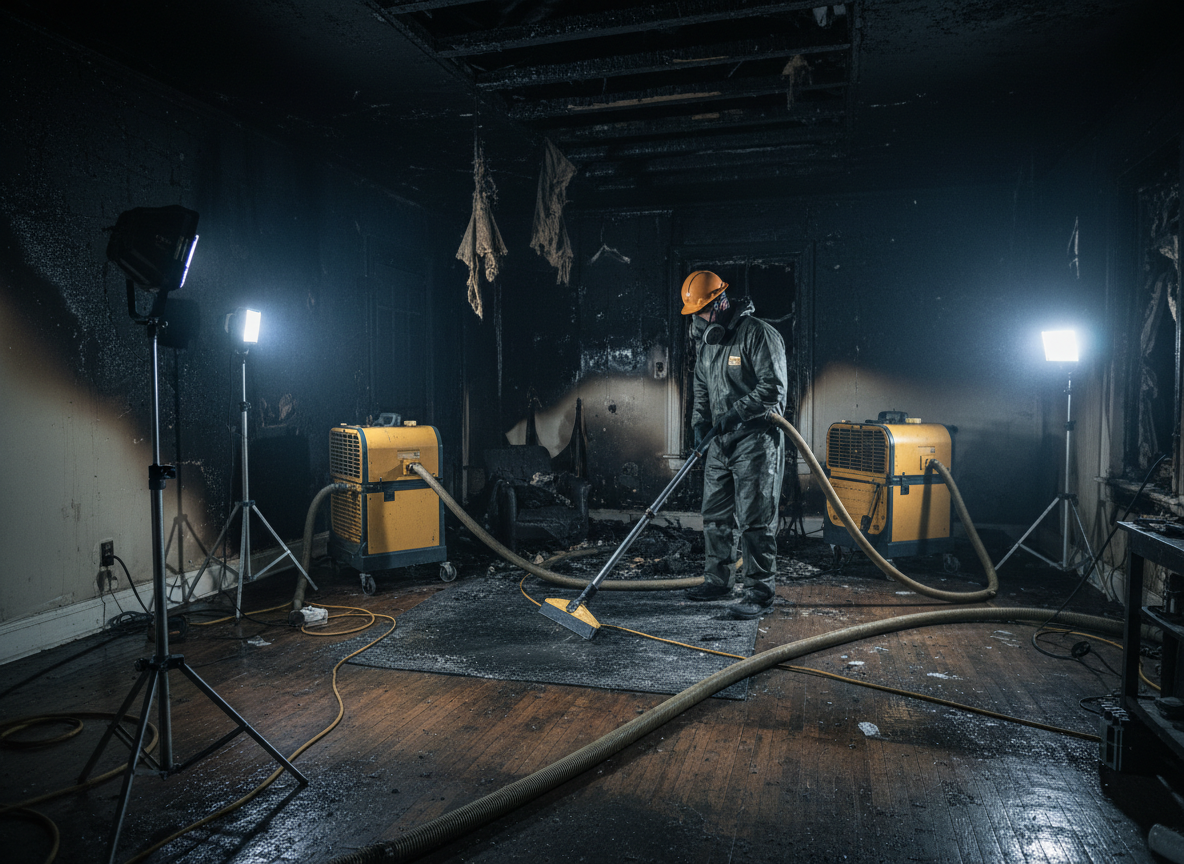
Water damage remediation after fire begins with identifying how suppression water interacts with soot and ash in Bryn Mawr homes. Older single-story houses common along Juanita Street and nearby streets often have plaster walls and hardwood floors that absorb water quickly, allowing hidden saturation behind baseboards and in subfloors. Technicians must separate water extraction from soot removal because pressure washing can drive particles deeper into porous materials, creating long-term odor and staining issues.
Firefighting water in the Bryn Mawr area frequently pools in crawl spaces and attics due to the flat terrain and older rooflines typical of San Bernardino County housing stock. This standing water mixes with alkaline soot to produce corrosive residues that damage electrical wiring and HVAC ducts if not neutralized early. Proper remediation requires targeted antimicrobial treatment on affected framing and insulation rather than blanket drying, since residual moisture can trigger mold growth once temperatures rise after winter rains.
Code considerations in Bryn Mawr include ensuring restored structures meet current San Bernardino County ventilation standards after fire-related water intrusion. Removing saturated drywall often reveals additional water paths along shared walls in adjacent properties, requiring coordination with neighbors to prevent cross-contamination. Final clearance testing focuses on both moisture levels and airborne particulates to confirm the space is safe for reentry.
Common Hidden Damage Points
In Bryn Mawr homes, water from fire hoses often travels along stucco exteriors into wall cavities near window frames, especially on properties built before 1970 where sealants have degraded.
Technician insight
In Bryn Mawr, the thing that catches most people out with water damage remediation after fire is how quickly suppression water migrates into the dirt crawl spaces under 1950s homes along Juanita Street, turning soot into a sticky residue that standard fans cannot pull out without first breaking up the alkaline crust.
Crawl Space Saturation After Kitchen Fire
Firefighters used several hundred gallons to contain a kitchen blaze in a Bryn Mawr home. Water traveled under the subfloor into the crawl space, mixing with soot from the ceiling. We extracted the water, treated the residue on joists, and dried the space over four days to prevent mold before insulation replacement.
How it works
- 1
Initial Assessment
Inspect all affected rooms, attics, and crawl spaces to map water migration paths created by firefighting efforts.
- 2
Water Extraction
Remove standing water and saturated materials while containing soot to avoid spreading residue through the home.
- 3
Neutralization and Drying
Apply pH-neutral cleaners to soot residues then use targeted drying equipment suited to Bryn Mawr's seasonal humidity swings.
- 4
Restoration Verification
Test moisture content and air quality before reconstruction begins to confirm no hidden pockets remain.
Pricing
Costs depend on the volume of water introduced, number of affected rooms, and access limitations common in Bryn Mawr's older housing.