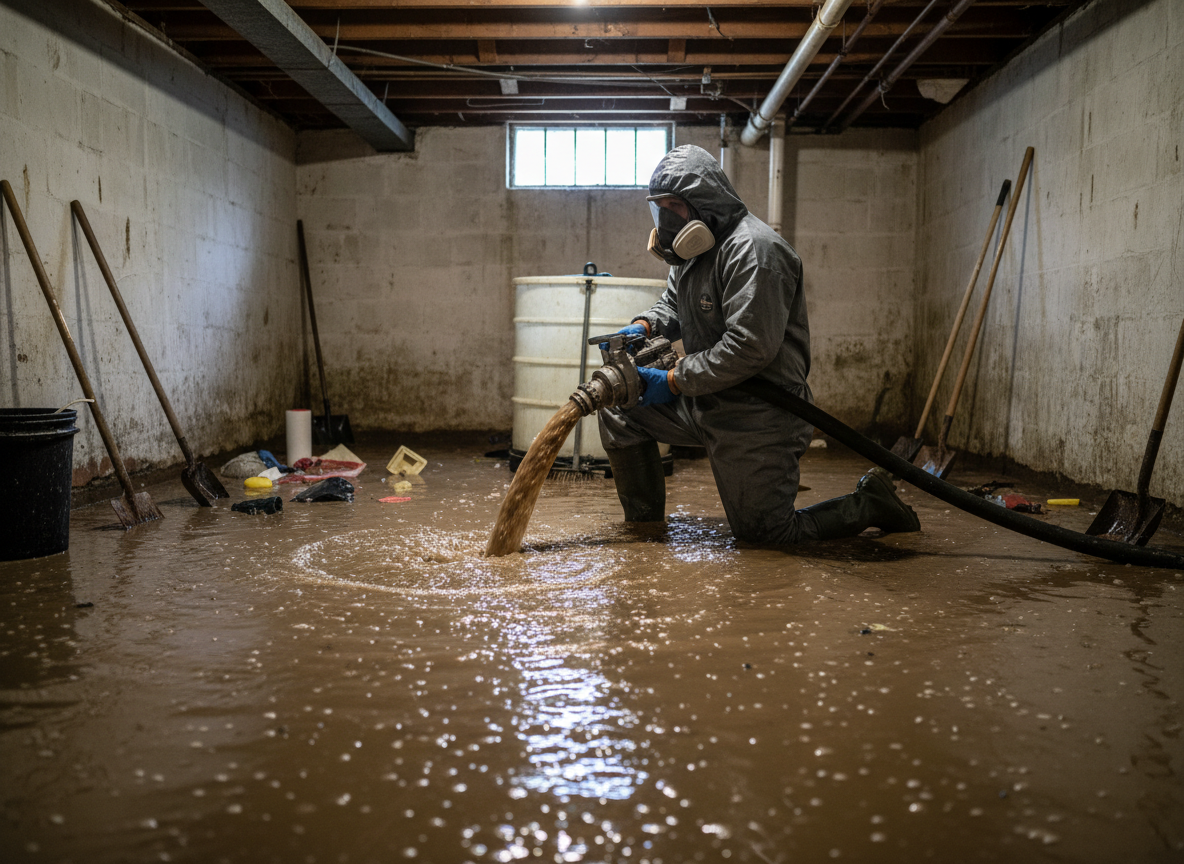
Sewage cleanup in Bryn Mawr requires strict containment because older housing stock along streets like Juanita often connects to aging municipal lines that back up during heavy winter rains. Contaminated water can migrate quickly through crawl spaces and slab foundations common in San Bernardino County homes, carrying pathogens that settle into drywall and subflooring if extraction is delayed.
Technicians start by isolating the affected zone with physical barriers and negative air machines to prevent cross-contamination into living areas. Removal uses truck-mounted extraction units sized for the volume typical in single-family homes here, followed by EPA-registered disinfectants applied to porous materials that cannot be saved. Moisture mapping with infrared cameras confirms hidden saturation behind baseboards before any reconstruction begins.
Homeowners in Bryn Mawr should never attempt DIY cleanup after a sewage event because incomplete removal of graywater or blackwater residues can trigger mold growth weeks later when temperatures rise. Local terrain with clay soils slows natural drying, so professional dehumidification and air movers must run for several days to reach safe moisture levels below 15 percent.
Coordination with San Bernardino County health guidelines is essential when sewage reaches yards or shared drainage ditches near Redlands and Loma Linda. Final clearance testing verifies that surfaces meet post-remediation standards before occupants return, avoiding liability issues that arise from lingering odors or bacteria.
Technician insight
In Bryn Mawr, the thing that catches most people out with sewage cleanup is the clay-heavy soil around older homes near Juanita Street that slows drainage after winter rains, turning small backups into widespread contamination if not addressed fast.
Sewer Backup After Winter Rain
A Bryn Mawr homeowner on a side street off Juanita reported water rising in the laundry room after a storm. Inspection showed the line had backed up through an old cleanout, saturating the slab and adjacent wall cavities. Extraction removed several hundred gallons, followed by targeted drying and disinfection; the home was cleared within four days without secondary mold issues.
How it works
- 1
Initial Assessment
Technician inspects the source of the backup, maps affected rooms, and documents water category and extent using moisture meters.
- 2
Containment and Safety Setup
Barriers and negative air are established, PPE is donned, and electrical hazards are isolated before any water movement.
- 3
Extraction and Removal
Standing sewage is pumped out, saturated materials are removed, and remaining moisture is extracted from carpets, pads, and flooring.
- 4
Sanitization and Drying
Disinfectants are applied, then industrial drying equipment runs until moisture readings confirm safe levels throughout the structure.
- 5
Final Verification
Clearance testing and odor checks are performed before the space is released for reconstruction or re-occupancy.
Pricing
Pricing varies by volume, affected square footage, and materials removed; we provide an upfront quote after on-site inspection.