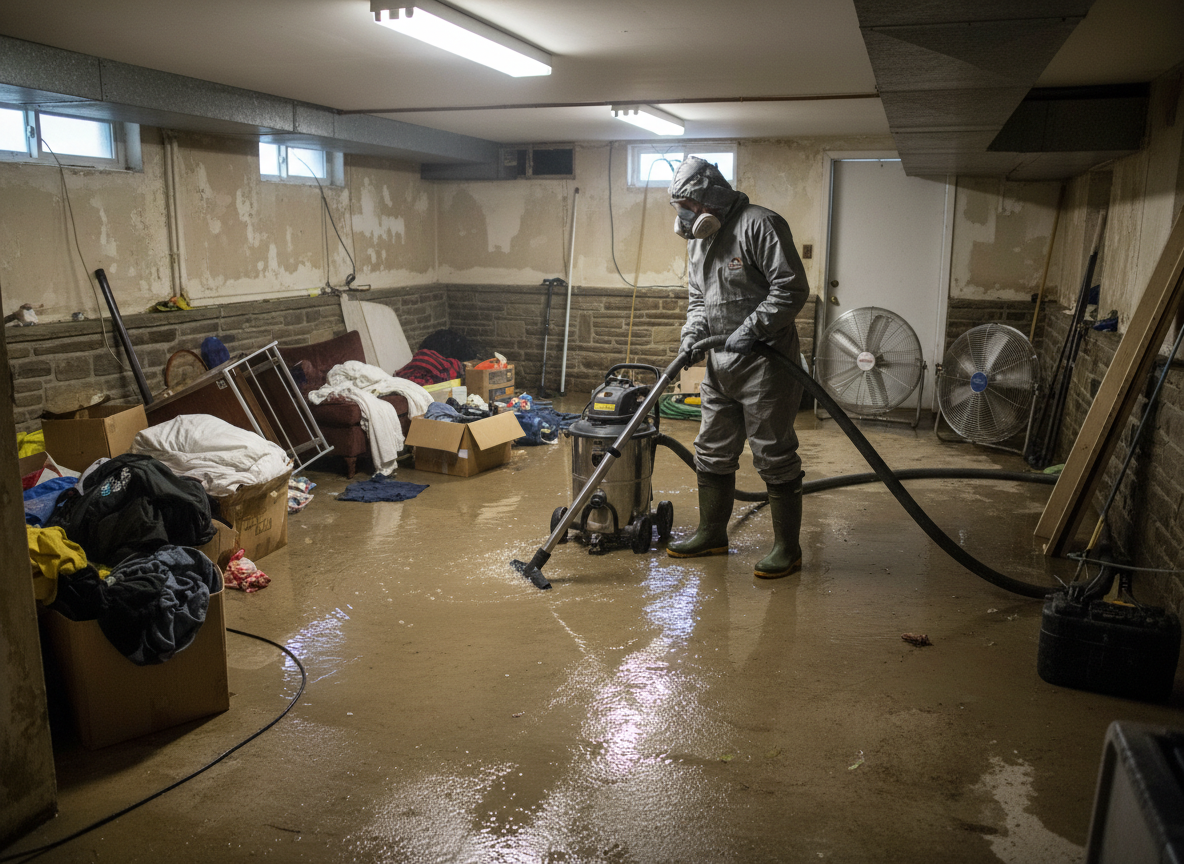
Bryn Mawr homes along Juanita Street and nearby blocks often feature older foundations built before modern grading standards, so water from winter storms pools against stem walls and seeps through cracks or porous concrete. When a basement floods, the first priority is removing standing water without driving moisture deeper into the slab or adjacent footings. Technicians use submersible pumps rated for silt-laden water common after San Bernardino County rains, followed by air movers and dehumidifiers sized for the square footage and ceiling height typical in these single-story residences.
Edge cases appear when floodwater reaches electrical panels or HVAC equipment located in the lower level. In those situations the crew isolates power before extraction and documents moisture levels in framing members with pin meters to satisfy insurance adjusters. Because many Bryn Mawr properties sit on clay-heavy soil that drains slowly, hidden saturation behind baseboards or under carpet padding can linger for weeks if not addressed with targeted demolition and negative-air drying.
Code considerations include verifying that any replaced electrical outlets meet current GFCI requirements once the space is dry. Homeowners are advised to keep finished basement storage at least six inches off the floor during the rainy season, as even minor leaks from nearby irrigation lines can overwhelm older French drains that were never designed for the volume of water now common in the area.
Technician insight
In Bryn Mawr the thing that catches most people out with basement flood cleanup is how the clay soil along Juanita Street holds water against older foundations for days after the rain stops, so what looks dry on the surface still needs extended drying behind baseboards or the job fails later.
Storm runoff into older basement
Heavy overnight rain sent runoff down a side yard slope and into a Bryn Mawr basement through a cracked foundation joint. We found standing water six inches deep plus saturation in the lower drywall. After extraction and targeted drying the space passed final moisture checks with no mold growth.
How it works
- 1
Emergency Assessment
Arrive on site, locate the water source, and map moisture migration using thermal imaging and moisture meters.
- 2
Water Extraction
Remove standing water with commercial pumps and wands, then extract trapped moisture from carpets and pads.
- 3
Drying and Dehumidification
Place air movers and dehumidifiers, monitor daily moisture readings until materials return to normal levels.
- 4
Sanitizing and Final Check
Apply antimicrobial treatments where needed, remove any remaining affected materials, and confirm the space is dry before turnover.
Pricing
Cost depends on water volume, affected square footage, and whether hidden moisture requires additional demolition.