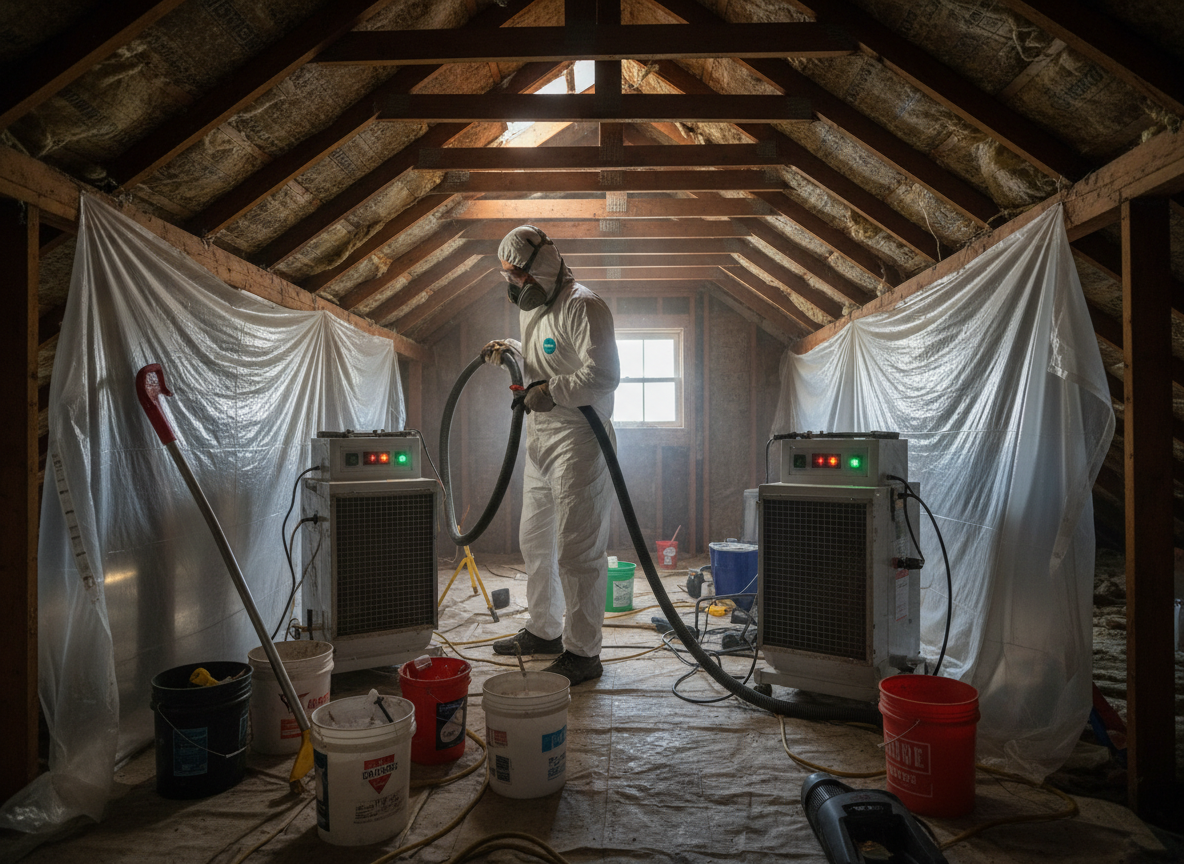
Attic mold in Bryn Mawr often starts from roof penetrations around vents or from condensation in homes built before 1980 that lack modern ridge venting. Cellulose insulation holds moisture longer than fiberglass, allowing black mold to spread along rafters and into wall cavities. Technicians remove affected insulation, treat framing with EPA-registered antimicrobials, and improve airflow before reinstalling new material rated for the area’s temperature swings.
Edge cases include mold that has migrated into electrical boxes or around HVAC ducts common in single-story ranch homes near Juanita Street. These require containment barriers and negative air machines to prevent spores from entering living spaces. Local building codes require permits when more than 10 square feet of drywall is disturbed, so crews coordinate with San Bernardino County inspectors before closing up ceilings.
Homeowners frequently discover the issue after monsoon-season leaks or when selling a property and receiving an inspection report. Delaying remediation allows spores to settle into carpet and furniture on the floor below. Proper drying with commercial dehumidifiers sized for attic volume prevents recurrence during the dry summer months when indoor humidity can still spike from evaporative coolers.
Technician insight
In Bryn Mawr the thing that catches most people out with attic mold remediation is the 1950s and 60s tract homes along Juanita Street that have only gable vents and no ridge vent, so even after we dry the space the next rain can push moisture right back in unless we add proper exhaust.
Hidden Mold After Roof Leak Near Loma Linda Border
A Bryn Mawr homeowner noticed ceiling stains after winter rains. Inspection revealed mold along rafters where a cracked flashing had allowed water to pool in the insulation. Crews contained the space, removed the wet cellulose, treated the framing, and added ridge venting. Air tests cleared the home within five days and the family avoided further spread into the living areas.
How it works
- 1
Initial Inspection
Technicians access the attic through existing openings or create a small inspection port to map moisture levels with infrared cameras and moisture meters.
- 2
Containment Setup
Plastic sheeting and negative air machines isolate the attic from living areas to keep spores from drifting into bedrooms and hallways.
- 3
Removal and Treatment
Affected insulation is bagged and removed, then rafters and sheathing receive antimicrobial application followed by HEPA vacuuming.
- 4
Drying and Ventilation Upgrade
Air movers and dehumidifiers run until wood moisture drops below 15 percent, after which additional soffit or ridge vents are added if needed.
- 5
Final Clearance
Post-remediation testing confirms spore counts match outdoor levels before new insulation is installed and the space is returned to use.
Pricing
Cost depends on attic size, extent of insulation removal, and whether structural wood treatment or ventilation upgrades are required.